

A $4 coffee can look like an easy thing to blame.
It is small. It is visible. You can point to it and say, "That was the mistake."
But sometimes the coffee was never the problem.
The problem was the day it landed.
The same coffee. A different week.
Picture a Tuesday morning.
You buy a coffee for $4.00. Payday is on Thursday. You have enough money in your account for the coffee, and the purchase goes through without a problem.
Then Wednesday night arrives.
A charge clears. Maybe it is a subscription. Maybe it is a bill you forgot was scheduled. Maybe it is a payment that took a few days to process.
By Friday morning, the account is negative. A $35 overdraft fee appears.
That $4 coffee has now cost $39.
Not because the coffee changed.
Not because you changed.
You're not bad with money. The timing is.
The calendar changed what that coffee meant.
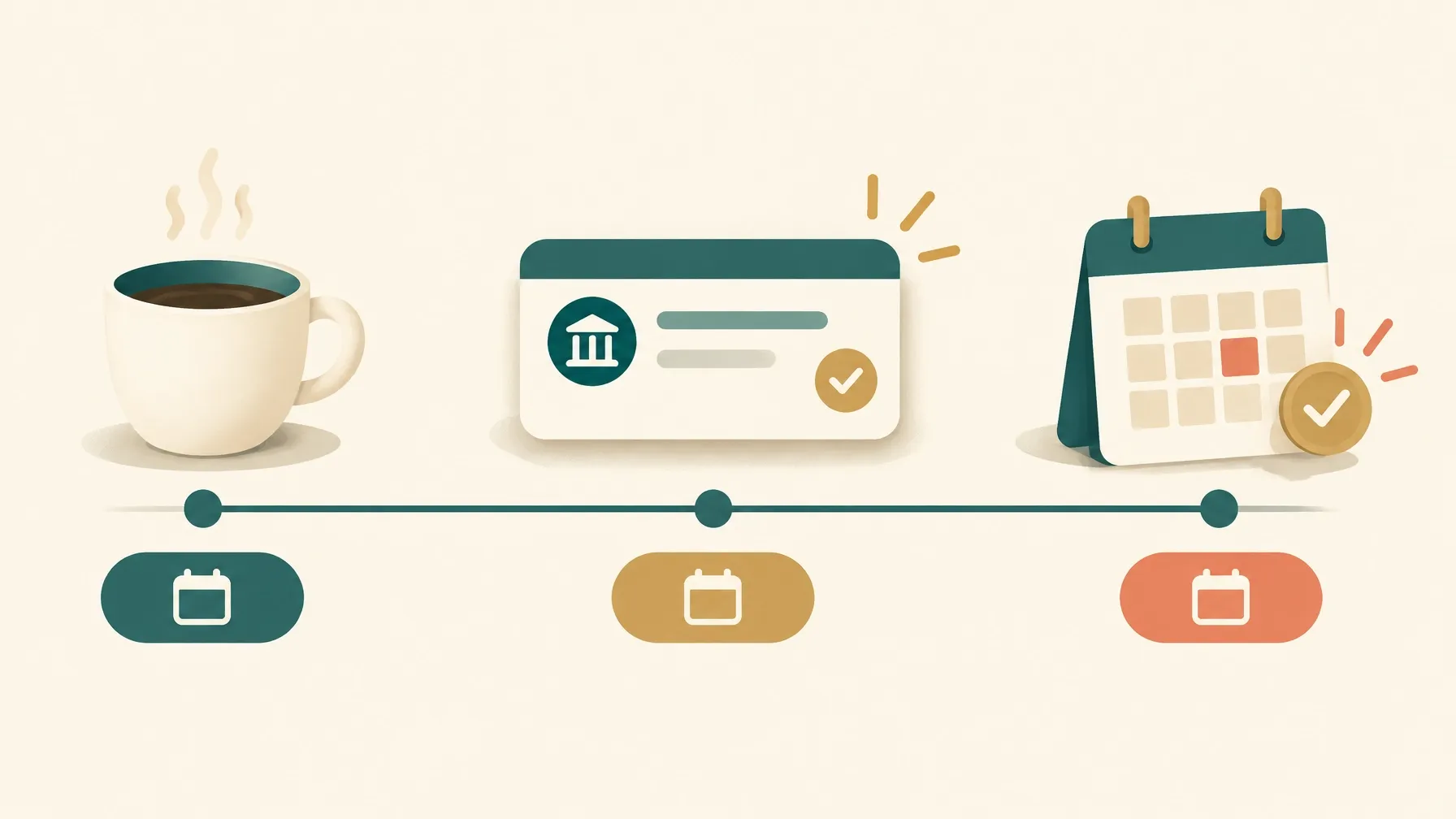
A calendar problem, not a character problem
When money leaves your account matters just as much as how much leaves.
A $4 purchase on the day after payday may feel completely different from the same purchase two days before payday. The amount is the same. The account balance is not.
This is why a monthly view can miss what is happening.
Across a full month, your income may cover your bills and everyday spending. But money does not move in monthly blocks. It moves on specific dates.
Rent may leave on the first.
A phone payment may leave on the tenth.
A subscription may clear on a Wednesday night.
Payday may not arrive until Thursday morning.
That small gap can create a real cost.
Why the small purchase gets blamed
The coffee is easy to see. The timing is harder to see.
You remember tapping your card at the café. You may not remember the automatic payment waiting in the background. You may not know exactly when a pending charge will clear.
So the coffee becomes the story.
But the full story is different:
- The coffee cost $4.
- Another charge landed before payday.
- The account did not have enough room for both.
- The overdraft fee added $35.
The coffee was simply the last charge in line.
That does not make the coffee responsible for the whole $39.
It means the account was tight on that particular day.
The same amount can feel different on different days
Consider two Fridays.
On the first Friday, you have just been paid. Your bills are covered, and several days remain before the next large payment. A $4 coffee is one small purchase among many.
On the second Friday, payday is still several days away. A bill is waiting to clear. Your balance looks positive, but much of it is already needed for something else.
The coffee is still $4.
The pressure around it is different.
This is the part of cash flow that a single account balance cannot always show. A balance tells you what is there now. It does not always show what will leave tonight or tomorrow.

How to check this for yourself
Start with the days, not the total.
Look at the next payday. Then list what will leave your account before that date. Include regular bills, automatic payments, subscriptions, and anything else already planned.
Now look at the days between today and payday.
Which days are tight?
Is there one day when two or three payments may clear? Is there a charge that often arrives before your paycheck? Is your balance showing money that already has a job?
You do not need a complicated system to see the pattern. You need the dates in front of you.
The free Payday Countdown tool can help. Enter the amount you have, your next payday, and what needs to leave before then. It shows the tight days ahead and gives you a simple daily estimate.
There is no bank login. Nothing leaves the browser. Your entries stay in that browser. It is just a clear way to see the space between today and payday.
The coffee was never the whole story
A $4 coffee can be a $4 coffee.
Or it can arrive just before a charge clears, just before payday, or just before several payments meet in the same small space.
That is not a personal failure. It is a date on a calendar.
When you can see what is leaving and when, the story becomes clearer. You can see the coffee for what it is: a small purchase that landed on a tight day.